Tracking concluded
FOX11: LIVE: Police chase suspect clocked at 100 mph on 10 Freeway in LA County
Near Chino
✅ Scene coverage concluded after 45 min — news helicopters departing.

As of 10:30pm: nothing overhead. Latest: 8:53pm — Ontario PD (N50NT) passed through in 2 minutes, mid-level. Live view ↓
Helicopter activity, local stories, and recent flights. San Bernardino County.
Ontario, San Bernardino County
As of 10:30pm: nothing overhead. Latest: 8:53pm — Ontario PD (N50NT) passed through in 2 minutes, mid-level.
GTLA Live · Live area briefing · positions from ADS-B, rechecked every 20 seconds
The aircraft recorded here most often across the full recorded history.
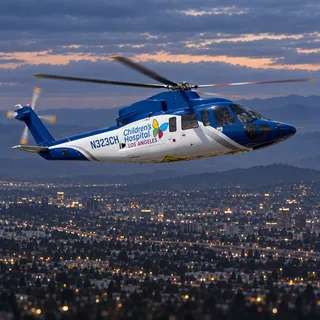 HelinetN323CH6 recorded visits· usually 5–8pm· last here Thu 9:11 PM
By hour of day
Find it next time in Your neighborhoods.
Saved only in this browser. No account or notifications.
Choose alerts for unusual helicopter activity over Ontario, not routine passes.
Choose alertsSaving does not turn on alerts.
Nothing overhead now — quiet for the last 2 hours.
Verbs like “held over” and “circled” describe the recorded flight path, not what was happening on the ground. Nothing here states a crime, a fire or a casualty.
Who flies over Ontario
1,235 recorded passes by police helicopters over Ontario, 113.9 hours overhead in total.
Most recorded overall: Ontario PD (N30NT), 484 recorded visitstypically 1,550–1,900 ft
Time and altitude patterns use the latest recorded passes, not the full history.
Police aircraft typically fly tight, repeated orbits over one spot to support officers on the ground, and can hold for a long time.
122 recorded passes by private and charter helicopters over Ontario, 3.8 hours overhead in total.
Most recorded overall: Patriot Aviation (N157PA), 7 recorded visits
Private and charter aircraft are usually in transit, on a tour or a survey flight, and pass through without stopping.
20 recorded passes by news helicopters over Ontario, 0.5 hours overhead in total.
Most recorded overall: AIR7 (N71HD), 4 recorded visits
News helicopters hold a wider circle at a higher altitude and arrive after a story is already underway; several at once usually means something is being covered live.
18 recorded passes by air ambulances over Ontario, 0.3 hours overhead in total.
Most recorded overall: Air Methods (N944AM), 21 recorded visitsusually 9pm–12amtypically 1,550–1,950 ft
Time and altitude patterns use the latest recorded passes, not the full history.
Air ambulances carry patients to and between hospitals. They usually fly straight in and out, often with a short circle over the landing site before they set down.
Save this page, choose alerts, or add a Home Screen shortcut.
Save & alert settings ↑Measured airspace record
GTLA Live has recorded 1,427 helicopter passes over Ontario, San Bernardino County across 143 days of tracking — 69.9 passes per week (5.9 hours overhead per week), busiest around 5pm, most often Police (LAPD / municipal).
Latest recorded update:
Every aircraft our tracking has recorded here recently, most recent first. The named ones have a page of their own.
What it usually means
Police (LAPD / municipal): Police helicopters typically orbit for a search, a pursuit, or to support officers on the ground. A tight circle overhead usually means the activity is directly below.
Private / civil: Private and civil helicopters are usually in transit, on a charter, or on a survey flight.
News helicopter: News helicopters usually mean live coverage of a developing story — a pursuit, a fire, or a scene the station is broadcasting.
Air ambulance: Air ambulances carry patients to and between hospitals. They usually fly straight in and out, and one passing over is most often on its way to or from a hospital.
Nearby coverage
The live view identifies aircraft by operator. A flight path alone does not establish what happened on the ground. Police aircraft typically fly tight, repeated orbits over one spot to support officers on the ground, and can hold for a long time.
The live view identifies aircraft by operator. A flight path alone does not establish what happened on the ground. News helicopters hold a wider circle at a higher altitude and arrive after a story is already underway; several at once usually means something is being covered live.
The live view identifies aircraft by operator. A flight path alone does not establish what happened on the ground. Air ambulances carry patients to and between hospitals. They usually fly straight in and out, often with a short circle over the landing site before they set down.
From the passes recorded here: police helicopters at 1,550–1,900 ft; air ambulances at 1,550–1,950 ft. These are the middle half of measured altitudes above sea level for each group, not a floor or a ceiling.
Most passes are brief — a minute or two straight through. The aircraft that stay longest here are police helicopters: 113.9 hours overhead across 1,235 recorded passes. Police aircraft typically fly tight, repeated orbits over one spot to support officers on the ground, and can hold for a long time.
Police aircraft usually fly tight, repeated orbits over one spot and often stay for a long time. News helicopters tend to hold a wider circle at a higher altitude and arrive after an incident is already underway. This page labels each aircraft by its operator, so you don't have to guess.
GTLA Live tracks public ADS-B and MLAT broadcasts that aircraft transmit about their own position, the same open data used by air-traffic enthusiasts worldwide. It is updated every few seconds.
More from GTLA
From the aircraft overhead to the story on your block.
Follow real aircraft in 3D or 2D. See their identities, distinctive fleet liveries, flight trails, and the airspace around them—including temporary flight restrictions.
Launch AirWatch →Hear a helicopter? Find the aircraft near your location, see who operates it, and jump straight into tracking it on the map.
Identify an aircraft →Explore helicopter activity by neighborhood: what’s overhead now, recent visits, and the aircraft that keep coming back. Follow the places you care about.
Find your neighborhood →Revisit concluded scenes with 3D flight-track playback and archived station video when available. Open a Film Room replay from the Incident Desk’s briefing log.
Browse stories & replays →Bring local TV or radio alongside the live map. Follow the aircraft while you watch available station coverage, all inside AirWatch.
Open AirWatch · choose TV or Radio →Choose alerts for police chases and breaking scenes, or every news helicopter launch. Turn on the neighborhood you’re in with one tap, any other from its own page, and manage it all in one place.
Choose my alerts →Run a local website? Put a live Ontario helicopter badge on it →