Tracking concluded
KTLA: Man injured in shooting in West Los Angeles; no arrests
Near Sherman Oaks
↩ 4 news helicopters returned to the scene — continuing coverage of the earlier story.

Live helicopter tracking for Van Nuys, Los Angeles County — updated every few seconds.
Saved on this device. No account needed. Alerts are a separate choice.
Van Nuys, Los Angeles County
Checking the sky overhead…
GTLA Live · Live area briefing · positions from ADS-B, rechecked every 20 seconds
Saving the page and turning on alerts are separate choices. Choose alerts below, or keep a shortcut for your next visit.
Nothing overhead now — quiet for the last 2 hours.
Verbs like “held over” and “circled” describe the recorded flight path, not what was happening on the ground. Nothing here states a crime, a fire or a casualty.
The sky over Van Nuys
By hour of day
Who flies over Van Nuys
The aircraft recorded here most often — the ones you’ll see again.
Every aircraft our tracking has recorded here recently, most recent first. The named ones have a page of their own.
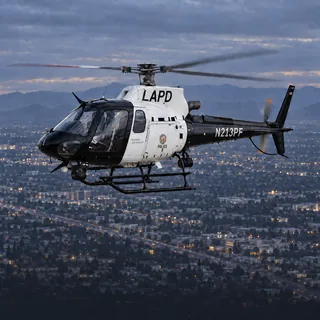
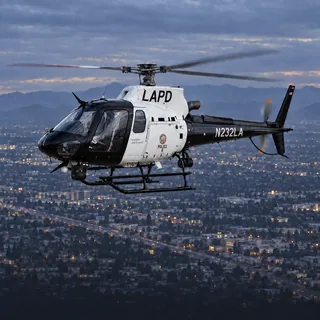
1,082 of 2,024 recorded passes over Van Nuys were police helicopters — 53% of the traffic here, 61.1 hours overhead in total.
Most often: LAPD (N267LA), 27 recorded passestypically 1,050–1,250 ft
Police aircraft typically fly tight, repeated orbits over one spot to support officers on the ground, and can hold for a long time.
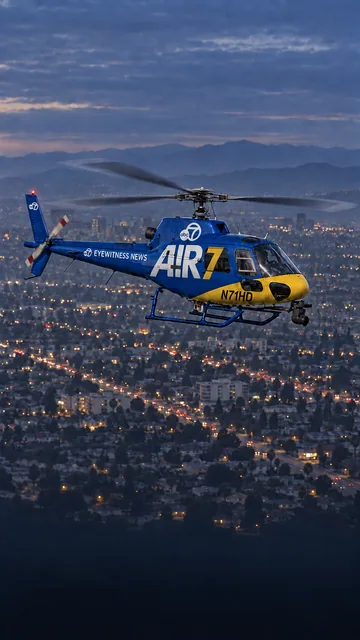
561 of 2,024 recorded passes over Van Nuys were news helicopters — 28% of the traffic here, 15.3 hours overhead in total.
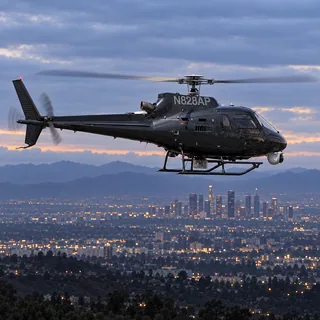
Most often: ABC NewsCopter (N828AP), 33 recorded passestypically 1,100–1,300 ft
News helicopters hold a wider circle at a higher altitude and arrive after a story is already underway; several at once usually means something is being covered live.
306 of 2,024 recorded passes over Van Nuys were private and charter helicopters — 15% of the traffic here, 5.6 hours overhead in total.
Most often: Helinet (N435AK), 5 recorded passestypically 1,200–1,400 ft
Private and charter aircraft are usually in transit, on a tour or a survey flight, and pass through without stopping.
60 of 2,024 recorded passes over Van Nuys were fire helicopters — 3% of the traffic here, 1.4 hours overhead in total.
Most often: LA City Fire (N305FD), 3 recorded passestypically 950–1,250 ft
Fire department aircraft respond to fires and rescues — often brief, often low, and often straight in and out.
What it usually means
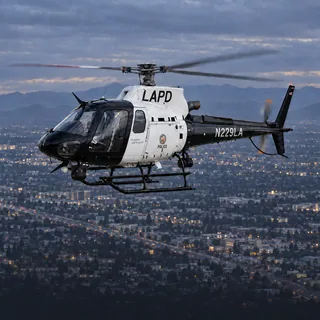
Police (LAPD / municipal): Police helicopters typically orbit for a search, a pursuit, or to support officers on the ground. A tight circle overhead usually means the activity is directly below.
News helicopter: News helicopters usually mean live coverage of a developing story — a pursuit, a fire, or a scene the station is broadcasting.
Private / civil: Private and civil helicopters are usually in transit, on a charter, or on a survey flight.
Fire / rescue: Fire helicopters mean a fire response or a rescue — often brief, and often at low altitude.
Nearby coverage
Police helicopters account for 53% of the 2,024 helicopter passes recorded over Van Nuys. The one you see most is LAPD (N267LA), 27 recorded passes. They typically fly at 1,050–1,250 ft above sea level. Police aircraft typically fly tight, repeated orbits over one spot to support officers on the ground, and can hold for a long time.
News helicopters account for 28% of the 2,024 helicopter passes recorded over Van Nuys. The one you see most is ABC NewsCopter (N828AP), 33 recorded passes. They typically fly at 1,100–1,300 ft above sea level. News helicopters hold a wider circle at a higher altitude and arrive after a story is already underway; several at once usually means something is being covered live.
Fire helicopters account for 3% of the 2,024 helicopter passes recorded over Van Nuys. The one you see most is LA City Fire (N305FD), 3 recorded passes. They typically fly at 950–1,250 ft above sea level. Fire department aircraft respond to fires and rescues — often brief, often low, and often straight in and out.
From the passes recorded here: police helicopters at 1,050–1,250 ft; news helicopters at 1,100–1,300 ft; private and charter helicopters at 1,200–1,400 ft; fire helicopters at 950–1,250 ft. These are the middle half of measured altitudes above sea level for each group, not a floor or a ceiling.
Most passes are brief — a minute or two straight through. The aircraft that stay longest here are police helicopters: 61.1 hours overhead across 1,082 recorded passes. Police aircraft typically fly tight, repeated orbits over one spot to support officers on the ground, and can hold for a long time.
Police aircraft usually fly tight, repeated orbits over one spot and often stay for a long time. News helicopters tend to hold a wider circle at a higher altitude and arrive after an incident is already underway. This page labels each aircraft by its operator, so you don't have to guess.
GTLA Live tracks public ADS-B and MLAT broadcasts that aircraft transmit about their own position, the same open data used by air-traffic enthusiasts worldwide. It is updated every few seconds.
More from GTLA
From the aircraft overhead to the story on your block.
Follow real aircraft in 3D or 2D. See their identities, distinctive fleet liveries, flight trails, and the airspace around them—including temporary flight restrictions.
Launch AirWatch →Hear a helicopter? Find the aircraft near your location, see who operates it, and jump straight into tracking it on the map.
Identify an aircraft →Explore helicopter activity by neighborhood: what’s overhead now, recent visits, and the aircraft that keep coming back. Follow the places you care about.
Find your neighborhood →Revisit concluded scenes with 3D flight-track playback and archived station video when available. Open a Film Room replay from the Incident Desk’s briefing log.
Browse stories & replays →Bring local TV or radio alongside the live map. Follow the aircraft while you watch available station coverage, all inside AirWatch.
Open AirWatch · choose TV or Radio →Choose alerts for police chases and breaking scenes, or every news helicopter launch. Turn on the neighborhood you’re in with one tap, any other from its own page, and manage it all in one place.
Choose my alerts →